QUICK ANSWER
A standard 3-bedroom house in Uganda costs roughly Shs90 million to Shs150 million to build in 2026, depending on finishes and location. A simple, carefully managed build can come in lower. The biggest risk is not the price of cement; it is materials and money leaking away on site because nobody is tracking them stage by stage.
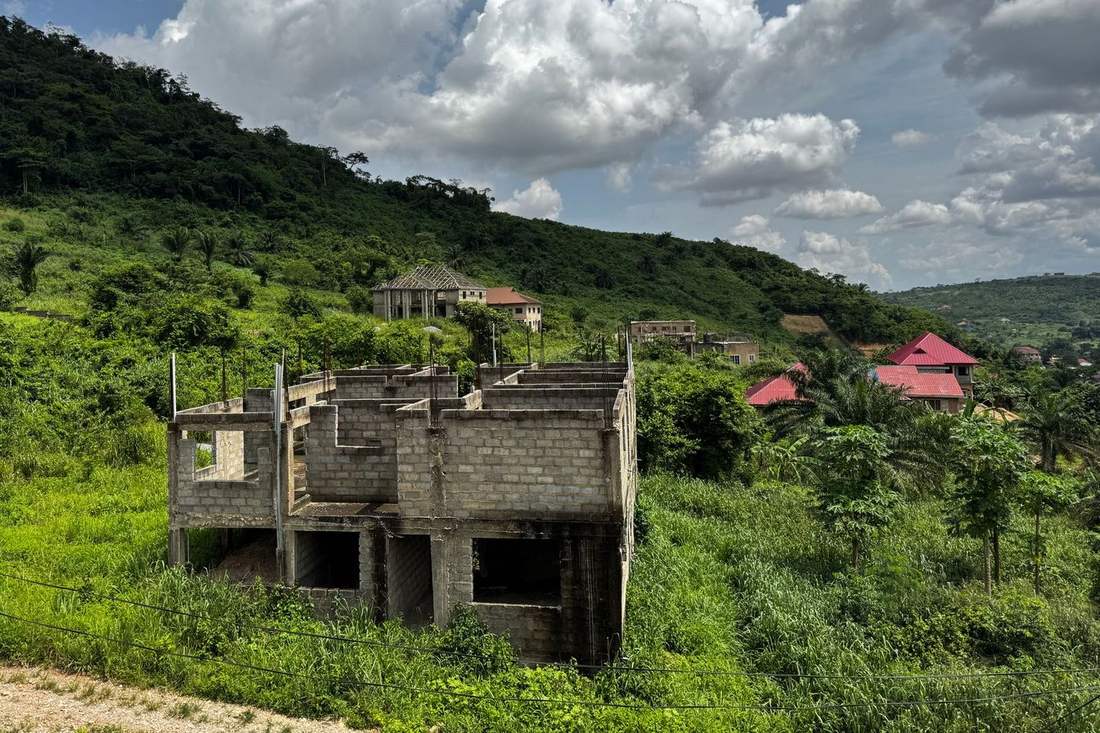
Building your own home is the biggest project most Ugandan families ever take on. It often runs over years, in stages, paid for from salary, business income or a SACCO loan. And almost everyone who has done it has a story about money that disappeared somewhere between the hardware shop and the walls.
This guide gives you 2026 prices, a stage-by-stage budget you can adapt, and the records that keep a build honest.
What a 3-bedroom house costs in 2026
Estimates vary because houses vary, but the ranges are fairly consistent:
- Business Times Uganda puts a standard 3-bedroom house at between Shs90 million and Shs150 million, depending on finishes, with upscale homes around Shs200 million.
- A Uganda Standard interview with architect Gilbert Okama gives about Shs150 million for a 200 square-metre four-bedroom bungalow, and explains how an architect can adjust the specification to bring that down.
- At the budget end, Real Muloodi argues that a decent self-contained 3-bedroom house is possible on about Shs60 million with careful planning.
For comparison, buying is far more expensive. A typical 3-bedroom house in Greater Kampala is listed at around Shs450 million in 2026. That gap is why so many families build.
The prices that move your budget
Cement. Prices differ by brand and town. Daily Monitor reported Tororo Cement at Shs31,000 in Mbale and Shs32,000 in Tororo, with Simba at Shs28,000. In Tororo, rising fuel pushed a bag that used to cost about Shs25,000 to about Shs33,000 in 2026, and some upcountry towns pay far more.
Bricks. Across much of the country, a trip of 1,000 mud bricks has gone from Shs200,000 to about Shs240,000. Bricks made on site can cost less than half of supplied bricks.
Iron sheets and nails. Roofing nails are around Shs8,000 a kilo, and white iron sheets in Kasese went from Shs32,000 to Shs34,000 in the same period.
Weight. The Uganda National Bureau of Standards now requires cement dealers to weigh bags on verified scales after finding outlets selling underweight cement. Ask for the bag to be weighed. A bag that is 3kg short is a 6% price rise you never agreed to.
How much cement a 3-bedroom house needs
Real Muloodi estimates a simple 3-bedroom house needs about 95 to 100 bags of cement, compared with 64 to 70 for one bedroom and 80 to 88 for two. Larger houses, storeyed houses and houses with concrete slabs need far more, often several hundred bags. Your engineer's bill of quantities (BOQ) is the number to trust.
A stage-by-stage budget
Every build is different, so use this as a structure, not a quote. Put in your own BOQ figures.
1. Plans and approvals. Architects' and engineers' fees usually take five to seven percent of the total budget. Add the local authority's plan approval.
2. Foundation. Excavation, hardcore, foundation walls, the slab, and damp-proofing. This is where cement, sand, aggregate and steel go fastest.
3. Walling to ring beam. Bricks or blocks, mortar, lintels and the ring beam. The biggest single use of bricks.
4. Roofing. Timber or steel trusses, iron sheets or tiles, nails and fascia. Roofing prices have been rising faster than most materials, so buy early if you can store safely.
5. Finishing. Plaster, floors, doors, windows, wiring, plumbing, paint and fittings. Finishing decides whether a house costs Shs90 million or Shs150 million, and it is where budgets run away.
Example (put in your own figures): a family plans a simple 3-bedroom house at Shs100 million.
- Plans and approvals at 6%: Shs6 million
- Foundation: Shs15 million
- Walling: Shs25 million
- Roofing: Shs18 million
- Finishing: Shs36 million
If finishing ends up 25% over, the house costs Shs109 million. If 40 bags of cement and 2,000 bricks go missing over the build, that is another Shs2 million to Shs3 million gone, with nothing to show for it.
Where building budgets really go wrong
A property consultant quoted by Business Times put it plainly: the biggest hidden cost in building is supervision, not materials. The common leaks are:
- Materials delivered but never used. Bags of cement, bars and sheets that "finished" faster than the BOQ said they would.
- Over-ordering. Buying for the whole house, then storing it badly on site.
- Paying for work twice. A fundi paid an advance with no record of what was agreed.
- Price creep. Buying stage by stage without comparing what each stage actually cost against the plan.
Records that keep a build honest
You do not need to be an engineer. You need four simple records:
- The plan. Your BOQ, split by stage, with quantities and budget prices.
- Deliveries. Every load received on site: date, item, quantity, supplier and who received it.
- Usage. What was used each week at each stage, signed off by your foreman.
- Payments. Every payment to suppliers and workers, with what it was for.
When deliveries minus usage does not match what is left on site, you know the same week, not when the roof is half done. If you are a contractor running several sites, the same four records per site tell you which jobs make money.
Try it with cement
Site materials check
Building a school or a business premises instead? The same discipline applies, and our guide on stopping stock loss in a shop uses the same idea of matching what came in against what went out.
Permits, fees and taxes before you build
Many families budget for every bag of cement and forget the paperwork, then pay for it later in fines, stopped work or a house that cannot be sold or mortgaged.
- An approved building plan and a building permit come first. KCCA has warned that under the Building Control Act it is a serious offence to start construction without an approved plan and a valid permit. Outside Kampala, your municipality or district does the same job.
- Plan inspection fees are charged by size. KCCA's published schedule charges Shs1,000 per square metre of ground floor area to inspect architectural plans, with separate fees for structural and drainage plans. A house with a 150 square metre ground floor would pay about Shs150,000 for the architectural inspection alone.
- Approval does not last forever. KCCA says plans lapse if the building is not completed within two years and six months of approval, after which you need a resumption permit. If you build slowly, in stages, plan for this.
- You need an occupation permit to move in. All buildings, including a family home, must get one; KCCA's fee schedule lists it at Shs80,000, and the Building Control (Amendment) Act 2025, signed in February 2026, made the rule a live issue for owners.
- Use registered professionals. Plans must be drawn and signed by a registered architect and engineer; KCCA publishes the lists.
If you hire a contractor: construction is one of the sectors URA now requires to issue electronic receipts through EFRIS, even when the contractor is not VAT-registered. Ask for one for every payment. It is your proof of what you paid, and a company building offices or rentals generally cannot claim the expense without it.
If you will rent the house out: rental income is taxed, and in Kampala the property may attract property rates. Our rental property guide sets out both.
How to protect your money during a long build
Most Ugandan houses are built over two to five years. That makes a few habits worth more than any single price:
- Buy materials stage by stage, not all at once. Cement hardens in a damp store and iron bars rust; a big early purchase is also the easiest stock to walk off site.
- Pay labour against work done, measured in courses of blocks, square metres of plaster or a finished slab, not by the week alone.
- Photograph every stage before the next one covers it: foundations before backfilling, ring beams before the slab, wiring before plaster. These photos settle arguments and help any future buyer or bank valuer.
- Keep one record per site of deliveries, use and balance, signed by whoever is on site. The calculator above shows how fast small gaps become large ones.
Frequently asked questions
How much does it cost to build a 3-bedroom house in Uganda?+
Most estimates put a standard 3-bedroom house at about Shs90 million to Shs150 million in 2026, depending on finishes and location. Simple houses built carefully can cost less, and high-end finishes can push it past Shs200 million.
How many bags of cement does a 3-bedroom house need?+
A simple 3-bedroom bungalow needs roughly 95 to 100 bags, according to Real Muloodi's estimates. Houses with concrete slabs, storeys or thick foundations need much more. Use your engineer's BOQ.
What is the price of a bag of cement in Uganda?+
It depends on the brand and town. In 2026, many towns report Shs28,000 to Shs36,000 a bag, and remote districts pay more because of transport.
How can I stop materials going missing on site?+
Record every delivery and every week's usage against your BOQ, and count what is left on site. When the three do not add up, ask the same week.
Do I need a building permit to build my own house in Uganda?+
Yes. You need an approved plan and a building permit before you start, and an occupation permit before you move in, even for a home you will live in yourself.
How much does building plan approval cost in Kampala?+
KCCA charges Shs1,000 per square metre of ground floor area to inspect architectural plans, with separate fees for structural and drainage plans and an occupation permit at the end. Outside Kampala, check with your local government.