QUICK ANSWER
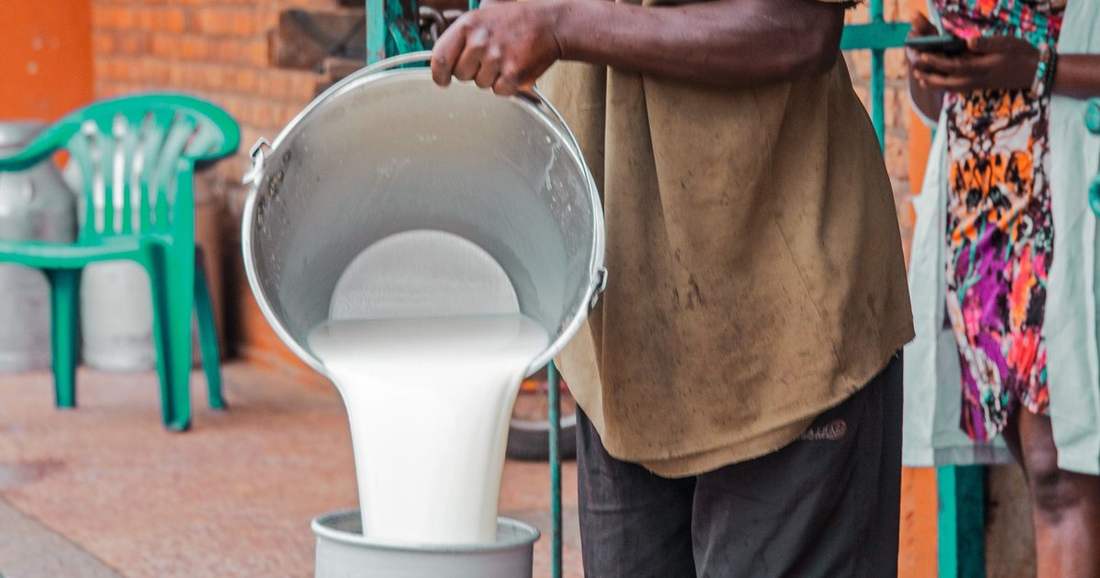
A cow's monthly profit is the litres she gave times the price you were paid, minus her feed, vet and breeding costs and her share of labour and pasture. Record each cow's milk morning and evening, and her costs as they happen. Within a few weeks you will see which cows carry the farm and which ones it carries.
Uganda is a big milk country. The FAO puts annual production at about 5.3 billion litres, from herds ranging from a few cows on a zero-grazing unit in Wakiso to large ranches in Kiruhura.
Yet ask most dairy farmers which of their cows makes them the most money, and they will name a favourite rather than a figure. That is costly, because the difference between cows on the same farm is often bigger than the difference between farms.
Uganda's dairy sector at a glance
Uganda has gone from importing milk to exporting it. A 2024 situation analysis of the dairy value chain reports that production rose from 0.4 to 3.1 billion litres a year over two decades, while consumption per person, at about 60 litres a year, is still only a third of what WHO recommends. Estimates of national production differ between sources, and the FAO's figure is higher still; what they agree on is that the sector has grown fast.
Yet productivity per cow is low. Tetra Pak, working with Pearl Dairy farmers in the south-west, put the national average at about four litres per cow per day. That gap between the average cow and the best cow is where records pay for themselves.
How much milk a cow gives in Uganda
Yields vary enormously with breed, feed and management:
- Ankole cows under traditional management give roughly 2 to 2.5 litres a day. A Makerere study of dairy productivity found an average of 2.2 litres for Ankole against 8.75 for Holstein-Friesian, with 5.29 litres across all cows studied.
- Crossbreds do much better. Research in south-western Uganda recorded 11.2 litres a day for 50% Friesian-Ankole crosses against 2.4 litres for pure Ankole on the same farms.
- Management matters as much as breed. A Swedish study of Ugandan farms found cows milked twice a day gave 1.9kg more milk daily than cows milked once.
Even within one breed, individual cows differ a great deal. At NAGRC's Nshaara ranch, careful selection and records lifted Ankole herd averages from 5.2 to 8.6 litres per cow per day between 2023 and 2025, and the manager could see from the records which cow had peaked at 14 litres one morning. That is the power of writing it down.
What you are paid per litre
Farm-gate prices swing with the seasons and with where you are. In the 2026 dry spell, the Ntungamo Dairy Farmers' Cooperative Union told the Daily Monitor that prices rose from Shs700–1,000 to Shs1,200 a litre as volumes fell, while a Kabale cooperative raised its buying price from Shs1,800 to Shs2,000. In wet seasons, when milk is plentiful, prices fall again, sometimes sharply.
You cannot control the price. What you can control is your costs, which cows you keep, and which buyers you sell to.
Step 1: record milk per cow, morning and evening
Give each cow a name or ear-tag number and write down her milk at every milking. It takes minutes. Within a few weeks you will see:
- Which cows give most of your milk
- Where each cow is in her lactation, and when she is likely to dry off
- Sudden drops in yield, often the first sign of mastitis, tick-borne disease, heat or poor feed, days before you would notice by eye
Step 2: record what each cow costs
For every animal, keep:
- Feed and supplements: dairy meal, mineral licks, silage, brewers' waste
- Health: vet visits, drugs, acaricides, vaccines, dewormers
- Breeding: AI or bull service dates, pregnancy checks, calving, drying off
Then share out the costs that belong to the whole herd, such as pasture, water, labour and spraying, equally across the cows (or by milking cows only, if you prefer).
Step 3: work out profit per cow, per month
Example (put in your own figures): a farmer sells milk at Shs1,000 a litre.
- Cow A (Friesian cross): 12 litres a day × 30 days = 360 litres × Shs1,000 = Shs360,000. Her feed, vet and share of costs come to Shs190,000. Profit: Shs170,000.
- Cow B (same breed, same feed): 4 litres a day × 30 = 120 litres = Shs120,000. Her costs are Shs175,000. Loss: Shs55,000.
Same farm, same feed, same price. One cow is paying for the other. Without records, both look like "good cows". With records, you have decisions to make: is Cow B sick, late in her lactation, or simply a poor milker who should be bred differently or sold?
Try it with your cow
Profit per cow calculator
Step 4: track every buyer and what they owe
Milk goes to collection centres, cooperatives, hotels, schools and neighbours, often paid weekly or monthly. Record the litres delivered to each buyer every day and the agreed price. At the end of the period you know exactly what each buyer owes, and you can follow up with the figures in hand rather than arguing from memory.
Example: you deliver 80 litres a day to a hotel at Shs1,200 and they pay monthly. That is about Shs2.9 million a month riding on one buyer's word. If they are two weeks late, you are carrying their cash flow while still paying for feed and wages.
Step 5: pay workers fairly and on time
Herdsmen and milkers are the backbone of a dairy farm. Record their days worked, advances taken and pay, so wages are correct, on time and never in dispute. A worker who trusts the records is less likely to leave in the middle of the dry season.
Step 6: plan for the dry season
With a year of records you can see how far yield and price move between seasons on your own farm. That lets you plan feed conservation, such as silage or hay, and cash for the dry months before they arrive, rather than selling animals in a hurry.
Keeping birds as well? Read poultry farming in Uganda: costs, egg prices and records.
Frequently asked questions
Is dairy farming profitable in Uganda?+
It can be, but profit varies widely between farms and between cows on the same farm. Breed, feeding, milking twice a day and selling to reliable buyers all matter. Recording milk and costs per cow is how you find out which animals are profitable.
How much milk does a cow give per day in Uganda?+
It depends on breed and management. Studies have found Ankole cows averaging about 2 to 2.5 litres a day, Friesian-Ankole crosses around 7 to 11 litres, and well-managed Friesians more. Your own twice-daily records are the figure that matters for your farm.
What is the farm-gate price of milk in Uganda?+
It changes with the season and region. In the 2026 dry spell, farmers in Ntungamo reported prices rising from Shs700–1,000 to Shs1,200 a litre, and a Kabale cooperative raised its price to Shs2,000. Prices usually fall in the wet season.
How do I calculate profit per cow?+
Multiply the litres she gave in the month by the price you were paid, then subtract her feed, vet and breeding costs and her share of labour and pasture.