QUICK ANSWER
To start a mobile money agent business in Uganda you need a registered business, a small kiosk or a counter in an existing shop, and working capital split between float on your agent line and cash in your drawer. MTN says you need at least Shs200,000 to start; a busy spot needs far more so you never turn a customer away. You earn a commission from MTN or Airtel on every deposit and withdrawal. The customer's fee is taken from their wallet automatically, and you should never charge them extra.
Mobile money is how Uganda pays. The average mobile money payment in Uganda rose to about Shs45,600 in the first half of 2026, and almost every one of those shillings enters or leaves the system through an agent's counter. That is why the agent business is still one of the most common first businesses in the country, and why so many shops run it beside their main trade.
This guide covers what it takes to start, how much float you really need, what customers pay in 2026, how agency banking compares, and the taxes and records that decide whether an agent makes money or slowly loses it.
How a mobile money agent makes money
An agent swaps cash for electronic money and back again. When a customer deposits Shs50,000, you take their cash and send Shs50,000 from your float to their wallet. When they withdraw, they send e-money to your agent line and you hand over cash. Each time, the network pays you a commission.
You do not set the price. The customer's withdrawal fee comes off their wallet automatically, and MTN's own tariff guide tells customers not to pay an agent anything for their transactions. Overcharging is still common: field research by Innovations for Poverty Action found that 19 percent of transactions in Uganda involved overcharging, the highest of the countries studied. Customers notice, and they move to the agent down the road.
You can serve more than one network. Bank of Uganda's mobile money guidelines prohibit exclusive agreements between a provider and an agent, so most counters carry both MTN and Airtel, and many add a bank.
What you need to start
- A registered business with a TIN, and a trading licence from your local authority.
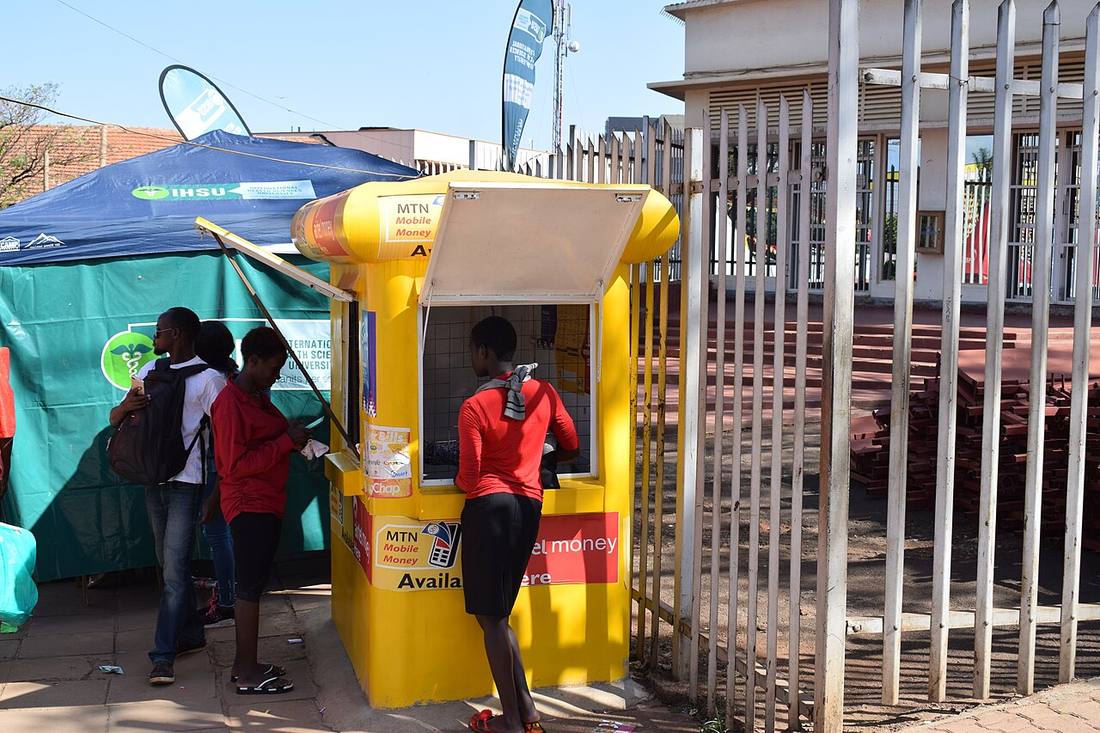
- A fixed place to work: a branded kiosk, or a counter inside a shop you already run.
- Your national ID and the network's application forms, either directly with MTN or Airtel or through a master agent who supervises a group of agents.
- Capital for float and cash. MTN's published minimum is Shs200,000 to buy float and keep cash for withdrawals.
Shs200,000 is enough to open. It is rarely enough to stay open on a busy street, because one customer withdrawing Shs300,000 can empty your drawer before lunch.
How much float and cash you really need
Your money sits in two places at once: e-value on each agent line, and cash in the drawer. Deposits move money from the line into the drawer; withdrawals move it back. If either side runs out, you turn customers away, and in this business a customer turned away rarely comes back.
Work it out from your own traffic. Note the biggest withdrawal day you have had in a week and keep at least that much in cash, plus the same again as float across your lines. Near markets and schools, Mondays and the start of term are the heaviest.
When you run short, MTN offers agent float loans. Agents qualify after at least six months in operation, and the weekend float loan carries a 1.5 percent access fee for a three-day loan. That is cheap for a weekend rush and expensive as a habit.
What customers pay to withdraw in 2026
Two charges land on every withdrawal: the network's fee, set in bands, and the government's tax. The excise duty is 0.5 percent of the amount withdrawn, plus 15 percent on the service fee. On a Shs500,000 withdrawal, that is Shs2,500 in duty on the amount alone.
MTN's agent withdrawal fees in 2026 are:
| Amount withdrawn (Shs) | MTN agent fee (Shs) |
|---|---|
| 500 – 2,500 | 330 |
| 2,501 – 5,000 | 440 |
| 5,001 – 15,000 | 700 |
| 15,001 – 30,000 | 880 |
| 30,001 – 45,000 | 1,210 |
| 45,001 – 60,000 | 1,500 |
| 60,001 – 125,000 | 1,925 |
| 125,001 – 250,000 | 3,575 |
| 250,001 – 500,000 | 7,000 |
| 500,001 – 1,000,000 | 12,500 |
| 1,000,001 – 2,000,000 | 15,000 |
| 2,000,001 – 4,000,000 | 18,000 |
| 4,000,001 – 5,000,000 | 20,000 |
Source: MTN's tariff bands, as compiled by Kampala Index. Airtel's bands match MTN's up to Shs1 million, and Airtel says its highest withdrawal fee is Shs12,500, for up to Shs7 million. So above Shs1 million, Airtel is cheaper.
The tax is under pressure. In April 2026, MTN and Airtel asked Parliament to cut it to 0.25 percent and cap it at Shs5,000, but the government declined to reduce it. In November 2026 the Prime Minister met both companies over the cost of mobile money, so watch for changes.
MTN and Airtel, side by side
Mobile money charges calculator
For a business that takes payments on mobile money and cashes out every day, these charges add up to real money each month. Put the number in the calculator, and the case for paying suppliers directly from the wallet, instead of withdrawing first, makes itself.
Agency banking: the other counter
Agency banking lets a bank appoint a shop to take deposits and withdrawals on its behalf. It runs under the Financial Institutions (Agent Banking) Regulations, 2017, and every agent must be approved by Bank of Uganda through the bank that recruits them.
The bar is higher than for mobile money. Banks look for a business that has operated a bank account, has a physical address, secure premises and a clean record, and a bank will not appoint a business that opened only to become a banking agent. That favours an established shop over a brand new kiosk.
The upside is reach. Through the shared platform run by the Uganda Bankers' Association, one agent can serve customers of several member banks, earning a fee on each transaction. A counter that offers MTN, Airtel and bank deposits catches almost every customer who walks past.
Taxes and licences for an agent business
Your commission is business income, so it is taxed like any other.
- Trading licence: renewed every year with your local authority.
- Income tax: if your yearly turnover is under Shs150 million, you can pay the simpler small business (presumptive) tax instead of filing full accounts.
- VAT: registration only applies once turnover passes the Shs150 million threshold.
The tax is easy. Proving your turnover is the hard part if your only record is the agent statement and a notebook.
Keep records or lose money quietly
Agents rarely go broke from one bad day. They bleed: a wrong send that is never recovered, a fake note, a helper who borrows from the drawer, a float loan fee paid every weekend. None of it shows up unless you balance every day.
At closing, count the cash, read the balance on every line, and compare the total with the morning's total plus the day's commission. If the gap is more than a few hundred shillings, find it that evening, while you still remember the customers.
Keep the agent business separate from the shop. Mixed in one drawer, a strong mobile money week can hide a shop that is losing money, or the other way round.
Frequently asked questions
How much capital do I need to become a mobile money agent in Uganda?+
MTN's published minimum is Shs200,000 for float and cash. That opens the counter, but a busy location usually needs much more so you can serve large withdrawals without running out.
Can I be an agent for both MTN and Airtel?+
Yes. Bank of Uganda's guidelines prohibit exclusive agreements between a provider and an agent, so you can carry both networks at the same counter.
How much does it cost to withdraw Shs100,000 on mobile money?+
On MTN or Airtel, the agent fee is Shs1,925, plus the 0.5 percent withdrawal tax of Shs500, so Shs2,425 comes off the wallet in total.
Should I pay the agent when I withdraw?+
No. The fee and tax are deducted from your wallet automatically. An agent who asks for extra cash is overcharging you.
Is mobile money withdrawal tax going down?+
Not yet. MTN and Airtel asked Parliament in April 2026 to cut it from 0.5 to 0.25 percent, but the government declined. Check before you budget.